McKinsey published its 2026 restaurant industry outlook in January with a single chart that should change how every Indian restaurant operator thinks about their menu. Late-night dining at limited-service restaurants has grown more than 10% annually since 2021, outpacing every other daypart in the industry. Lunch and dinner have flattened. Breakfast at quick-service chains has actively declined. The growth is happening at the edges of the day, not in the middle.
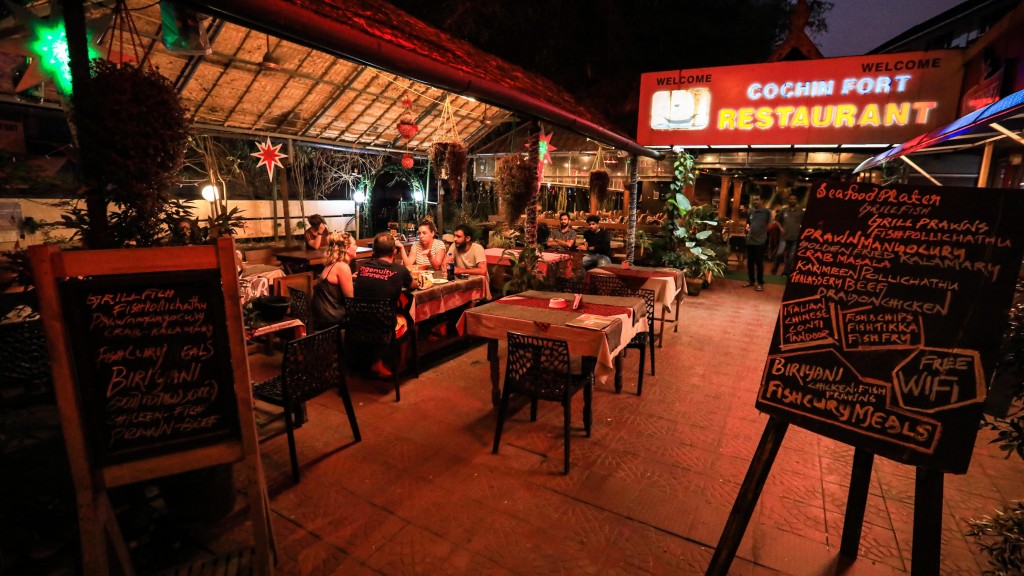
In India, the same pattern is visible if you know where to look. Open Mumbai or Bengaluru on Google Maps and search for "open now" at 12:30am on a Saturday. You will find a small, intentional set of late-night biryani joints, kebab corners, military hotels, Irani cafes, and 24-hour South Indian tiffin spots. Then look at the much larger set of multi-cuisine restaurants, casual-dining concepts, and quick-service brands that are closed by 11pm. They are missing demand they could be capturing with the kitchen they already have.
The same gap exists in reverse at breakfast. South Indian tiffin spots and a handful of Irani cafes own the breakfast daypart. Almost every other category, from north Indian casual dining to multi-cuisine restaurants to most QSR chains, does not show up before noon. The customer at 9am has to choose between a tiffin spot and going home hungry.
Both gaps are operator-side problems, not customer-side problems. The demand is there. The kitchen exists. The staff is partially in place. The thing that is missing is a menu that can switch.
What the data actually shows
Three structural shifts have redrawn the daypart map.
Late-night LSR is growing 10%+ annually globally, with 34% of consumers actively dining out later in the evening according to RMS. The driver is partly cultural (later social schedules, work-from-home flexibility on weekday mornings) and partly economic (late-night customers tend to be less price-sensitive because they are choosing between you and being hungry, not between you and three competitors).
Breakfast has split into two patterns. Quick-service breakfast has declined sharply (-8.7% in Q2 2025 per Revenue Management Solutions, with McDonald's CEO publicly calling it the weakest daypart industrywide). At the same time, full-service breakfast has been quietly growing. Toast platform data showed FSR breakfast reservations at 9am up 19% year-over-year in Q3 2025, driven by return-to-office. The pattern in India is similar: tiffin spots stay strong, casual breakfast at full-service restaurants is an underserved opportunity, and the QSR breakfast play is tougher than it looks.
Weekend brunch carries an outsized economic weight. Average order values during weekend brunch run 40-60% higher than regular weekday breakfast service, because customers are willing to pay for an experience, alcohol or premium beverages are in play, and the time pressure of a workday morning is gone.
What an Indian restaurant menu typically looks like
The default mode for an Indian restaurant is the all-day menu. One menu, one set of items, one set of prices, all printed on the same laminated card or PDF, available from 12pm to 11pm with maybe a token "breakfast available till 11am" line at the top. The customer who walks in at 9am, the customer who walks in at 1pm, and the customer who walks in at 11:30pm all see the same menu.
This format is operationally simple. It also leaves significant revenue on the table for three structural reasons.
First, the menu is not optimized for any specific daypart. The breakfast section is small or absent. The late-night section is non-existent. The lunch section is mixed in with the rest of the menu. The customer scanning at 9am sees yesterday's tandoori chicken and dal makhani and rotis, which is not what they want at 9am. The customer scanning at midnight sees a 60-item menu when they want a comfort food short list.
Second, pricing cannot adapt to the daypart. Lunch should be more competitive on price because there are more competitors and the customer is in a hurry. Late-night can be priced higher because the customer has fewer options. Weekend brunch should run a premium tier with combos, drink pairings, and experiential items. The single all-day menu cannot do any of this.
Third, the highest-margin items get hidden in the wrong moments. Late-night is a high-margin opportunity because customers are willing to pay more. The restaurant that puts its biriyani, signature kebabs, and dessert combos front and center at 11pm captures more spend than the restaurant that shows the same all-day menu. Most operators do not build this in.
What the daypart playbook actually looks like
This is the most direct menu-as-product-surface argument in restaurant operations. None of the moves below are exotic. All of them are impossible on a printed menu.
1. Build separate menus for distinct dayparts
At a minimum, four dayparts deserve their own menu logic.
Breakfast (7am to 11am) should run a focused menu of 8 to 12 items, heavy on speed, portability, and value. South Indian tiffins, eggs and toast, parathas with curd, healthy bowls with eggs or paneer, coffee and chai. Skip the long-cooked curries. Lead with what people order at 9am.
Lunch (12pm to 4pm) is the speed and value daypart. Thalis, combo meals, business lunch sets, single-portion mains with a price ceiling that reads as a clear value proposition. The customer is on the clock. The menu should make decisions easier, not harder.
Dinner (7pm to 11pm) is the indulgence and experience daypart. Full menu, premium signature items, chef specials, sharing plates, the higher-margin desserts and beverages. This is also where the standard "the menu" usually overlaps with the full-day default.
Late-night (11pm to 2am or later) is the comfort food and craving daypart. Short menu, 12 to 20 items max, focused on what people actually order at midnight: biriyani, kebabs, parathas, comfort curries, indulgent desserts, chai. Higher prices because the customer has fewer alternatives.
2. Add a weekend brunch tier where it makes sense
Weekend brunch is the highest-margin daypart available to most full-service restaurants. The customer is relaxed, time-rich, and willing to spend. Brunch menus should run 90-minute or 2-hour seatings, premium pricing, drink pairings, and combo formats that build average order value. A casual dining restaurant running standard menus on Saturday and Sunday at noon is leaving the most expensive turn of the week on the table.
The pattern that works: a separate weekend brunch menu, available 10am to 2pm Saturday and Sunday, that runs at 30 to 40% higher price points than the regular menu, with bottomless coffee, a few breakfast cocktails, and signature items the customer cannot get the rest of the week.
3. Use late-night to push high-margin items, not all items
The mistake at late-night is to keep the full menu open and assume the customer will navigate it. The right move is the opposite: a deliberately short late-night menu that surfaces the items the kitchen can produce fast at low staffing, with high contribution margin. Biriyanis travel well and have strong margins. Kebabs prep quickly off a partially closed kitchen. Indulgent desserts and milkshakes are high-margin and impulse-driven. The late-night menu should be 15 items the kitchen can produce on a skeleton crew, priced to reflect that the customer's alternative is hungry sleep.
4. Run different prices at different dayparts
This is the move that most directly captures margin and is most invisible to customers. The same paneer butter masala can be ₹320 at lunch (competing with three thali options), ₹360 at dinner (when customer expectations are higher and more sides are bundled in), and ₹400 at late-night (when the customer is choosing between you and going hungry). The customer rarely compares lunch and late-night prices. The menu surface that switches captures the margin. The menu surface that does not switches cannot.
5. Treat the menu surface as scheduled software, not a printed document
This is the operational shift behind everything above. The menu should switch on time, automatically, the way a schedule on a calendar switches between meetings. At 11am the breakfast items disappear and the lunch items appear. At 4pm the lunch combos rotate to dinner. At 11pm the late-night menu replaces everything else. Categories, items, photos, prices, and modifier groups all change without a staff member having to do anything.
This is where Menuthere fits in. Menuthere is built so a single digital menu surface runs across QR table ordering, takeaway, and direct delivery, with daypart switching as a flagship feature. Operators set the schedule once, and the menu changes itself. Breakfast appears at 7am. Lunch combos go live at 12pm. The late-night short menu replaces everything at 11pm. Weekend brunch runs Saturday and Sunday only, 10am to 2pm, with its own pricing tier. Done correctly, the customer never sees a wrong menu, and the operator never has to remember to swap one out.
6. Staff and kitchen ops should follow the menu, not the other way around
The reason most independent restaurants run a single all-day menu is operational. It is easier to staff a kitchen for one menu than four. The right way to think about this is to start with the menu, then design the staffing. A late-night menu of 15 items can run on a 3-person skeleton crew, two in the kitchen and one taking orders and packing. A breakfast menu of 10 items can run on a 4-person team that is half the dinner crew. The math is favorable when the menu is short and intentional. It is unfavorable when the menu is long and ambitious for every daypart.
The Indian-specific opportunity
Three sub-opportunities are particularly under-served in India right now.
Late-night non-veg in metro residential pockets. The demand is there, and a small number of military hotels, biryani specialists, and 24-hour South Indian spots own it. A casual-dining or multi-cuisine restaurant in any tier-1 metro that opens a focused late-night menu (biryani, kebabs, parathas, midnight chai) can capture local spend that currently leaks to the same five or six destination restaurants per neighborhood.
Weekend brunch in casual dining. India's middle-class brunch culture has matured rapidly in the last five years. Most restaurants still run their regular menu at noon on a Saturday, missing the higher price tier the customer is willing to pay for a brunch experience.
Breakfast at full-service casual dining. The tiffin spots own the breakfast value segment. Casual-dining restaurants serving an experiential breakfast (egg-forward dishes, parathas with sides, healthy bowls, signature coffee) at higher price points than tiffin spots have an open lane, especially in business districts and near coworking hubs.
Each of these is a daypart where most of the local restaurant inventory is closed or running an irrelevant menu, and a small number of intentional operators are owning the demand.
The bottom line
Late-night is the fastest-growing daypart in the industry. Weekend brunch carries the highest average order value of any service period. Breakfast at full-service is recovering on return-to-office. The Indian restaurants that capture these dayparts will compound a significant volume and margin advantage over the ones that do not.
The mechanical bottleneck is, again, the menu. Static menus cannot run four different daypart strategies. Digital menus can, automatically, on a schedule, with different items, different prices, different photos, and different categories at different times of day. The shift from a printed menu to a daypart-aware digital menu is one of the highest-ROI operational changes available to a restaurant in 2026.
The customer is showing up at 9am, at noon, at 8pm, at midnight, on Saturday brunch, and on Sunday afternoon. Each of those customers is a different person with different intent, different price sensitivity, and different cravings. The restaurant that shows them the right menu wins. The restaurant that shows them the same menu six times a day loses, one customer at a time.
Want a digital menu that actually runs your dayparts?
Menuthere is built so a single menu surface runs across QR tables, takeaway, and delivery, with daypart switching, scheduled menu changes, time-based pricing, and visual merchandising at the item level. Set the schedule once, and your menu runs itself.
Sources: McKinsey "What US consumers want from restaurants in 2026" (January 2026), Santiago and Company 2026 restaurant industry trends report (April 2026), Revenue Management Solutions QSR breakfast traffic data (Q2 and Q3 2025), Toast platform data on FSR breakfast reservations (Q3 2025), Circana breakfast traffic recovery data (Q1 2025), Nation's Restaurant News on uneven breakfast recovery (December 2025), NRA State of the Industry 2026, Evergreen daypart strategy research (December 2025), Mumbai and Bengaluru late-night dining listings.