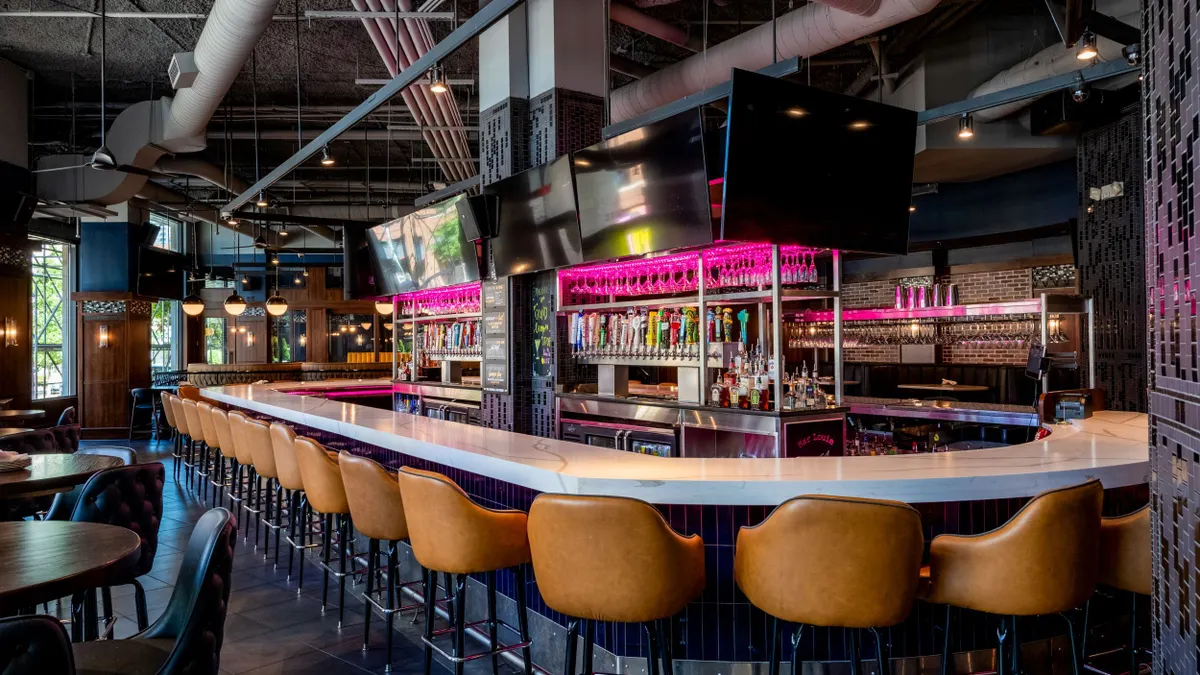
Bar Louie went from 130 locations in 2018 to 39 in October 2025. On the Border filed Chapter 11 in 2025 and now operates half the restaurants it did at the end of 2023. Outback Steakhouse, which once boasted 750 locations, has been actively shedding stores through 2025 and 2026. TGI Fridays is down to 79 U.S. locations from a peak well above 200. Smokey Bones is gone. Bertucci's. Pinstripes. Buca di Beppo. Rubio's. World of Beer. Tijuana Flats.
The trade press calls this the closure wave. The financial press calls it consolidation. Both framings miss the more interesting story for independents.
Every one of those closures left a trade area with the same demand and one fewer supplier. The customers didn't disappear. They didn't stop going out. They reassigned their wallets to whoever stood up to receive them. In most markets, that "whoever" is up for grabs for six to eighteen months after a chain shuts the doors. After that window, the next chain or strong regional rolls in, signs the lease, opens with marketing dollars, and takes the share.
The independents winning in 2026 are the ones who have learned to read the closure wave as a series of local windows rather than a national headline. They know what happens in their trade area when a Bar Louie closes. They know what to change about their menu the same week. They know how to read the lease re-listing on the corner before anyone else does. They know that menu agility, the structural advantage independents have over chains, is what lets them act inside the six-to-eighteen-month window before the chain players regroup.
This piece is the playbook for that.
What actually happens when a chain closes in your trade area
When a Bar Louie or On the Border or Outback shuts down a location, three things happen at the same time. Most independents only see the first.
Foot traffic redirects. This is the visible effect. The cars that used to fill the parking lot at 7pm Friday go somewhere else. If your concept can credibly serve any portion of the closed concept's audience, some of that traffic ends up at your door whether you do anything or not. Bar walk-ins increase. Reservation calls increase. Late-arrival walk-ups increase. Most independents notice this much.
A trained customer base goes looking for substitutes. This is the invisible effect, and it's the bigger one. The closed chain trained its customers on specific occasions, specific dayparts, specific menu structures. A Bar Louie regular wasn't just buying drinks. They were buying late-night gastrobar food with a specific price point and atmosphere. An On the Border regular was buying mid-priced Tex-Mex on a Friday family night. An Outback regular was buying steak as a budget special-occasion. Those occasions don't dissolve when the chain closes. The customer goes looking for the same occasion, and they spend two to six months trying alternatives before they settle.
Commercial real estate softens in the micro-market. This is the slow effect. A vacant former-chain box doesn't get a new tenant immediately. Landlords with closed Bar Louies, On the Borders, or Outbacks in their portfolio are looking at extended vacancies and renegotiated terms. If you've been considering a second location, or a buildout investment, the cost of doing so in a closure-affected trade area drops materially. Strong regional chains know to watch for this and move fast. Most independents miss the window entirely.
The math of the opportunity isn't dramatic in any single month. It's dramatic in the cumulative six-to-eighteen-month window, and it's almost completely captured by whichever operator moves first.
Why independents can capture this and chains can't
This is the part most operators underweight, because it sounds like marketing copy. It isn't.
A chain takes 12 to 24 months to add a menu item. Corporate marketing has to approve it. The food cost spec has to clear the supply chain team. The franchise field reps have to be trained. The menu has to be reprinted across hundreds or thousands of locations. The POS has to be updated chain-wide. The third-party delivery listings have to be synced. The advertising calendar has to make room.
A single-location independent takes 48 hours. Update the recipe at the line, update the price in the POS, swap the QR menu link, brief the staff at the next shift huddle. The new item is on the menu by tomorrow's lunch.
This was a structural disadvantage for independents from 1980 to roughly 2020, when the chain advantages of marketing reach, supply chain leverage, and brand consistency dominated. None of those advantages have gone away, but their value has compressed. The advantage that has grown is the one independents already had: speed of menu and operational change.
In a closure wave, speed of change is the entire game. The independent who adds a credible Tex-Mex section to the menu the week On the Border closes nearby captures the substitute-seeking customer. The independent who waits a quarter to "test it" lets the next chain entrant capture them.
The six-to-eighteen-month playbook
Week 1: Map the closure list in your trade area
Pull the list of chains that have closed within 10 miles of your operation in the last 24 months. Bar Louie, On the Border, Outback, TGI Fridays, Red Lobster, Smokey Bones, Bertucci's, Buca di Beppo, Applebee's franchisee closures, Wendy's (140 closed YTD 2026), Papa John's (300 closures announced through 2027), Pinstripes, Tijuana Flats, World of Beer.
For each closure, note three things: what occasion was that chain serving (late-night gastrobar, mid-price Tex-Mex, casual steak, etc.), what daypart was peak (Tuesday family night vs Saturday late night), and what was the price point. These three answers tell you exactly what category of substitute-seeking customer is now circulating in your trade area.
Week 2: Add the substitute occasion, not the substitute chain
The mistake most independents make is trying to become the closed chain. A neighborhood bistro shouldn't try to be an Outback. But that same bistro can add a credible steak feature on Friday and Saturday nights at a steakhouse-adjacent price point, knowing the Outback closed three miles away and its customers are looking.
This is where menu agility matters more than menu strategy. Don't redesign the whole concept. Add one or two items targeted at the specific occasion the closed chain was serving. Run it for 60 days. If the math works, keep it. If it doesn't, kill it the same week. A printed menu makes this expensive. A digital menu makes it free.
Week 3: Switch dayparts to match
A closed Outback was probably doing 60 to 70 percent of revenue on weekend dinner. A closed Bar Louie was probably doing 50 percent of revenue after 9 PM. Your menu doesn't need to be the same at 11 AM as it is at 9 PM. The Outback substitute-seeking customer is looking at 7 PM Saturday. The Bar Louie substitute is looking at 10 PM Friday.
If your menu is a static printed document, these are different concepts. If your menu is digital, they're different settings on the same surface. A daypart-switching menu lets a single concept credibly serve breakfast, lunch, happy hour, dinner, and late night, each with the items and prices and positioning that match the occasion the local market is now hunting for. This is the operational layer Menuthere was built for.
Week 4: Reprice for the migrated customer
A chain's pricing is a corporate decision made 12 months out. Your pricing can be a Wednesday decision. If the closed chain's customers are price-sensitive and that's why they were going to the chain in the first place, lean into a value section on the digital menu, visible only at the dayparts that matter, gone by Sunday brunch. If the closed chain's customers were paying up for occasion, run a higher-margin special on the same daypart and capture the trade-up.
A digital menu lets you reprice in real time. Wholesale beef jumped 12 percent? Update the steak feature price Tuesday. Local rent on a closing chain's corner dropped 15 percent? Take note of where the next opportunity is. The chains take 90 days to do what you can do in an hour.
Months 2 to 4: Promote into the void
The closed chain leaves an advertising hole as well as a physical one. The Yelp and Google Maps listings stay up for months but link to a closed business. Search traffic for the chain's brand in your area is still real, and it's now going to dead-ends. A modest local SEO push, organic content around "alternatives to [closed chain]" without naming it directly, and a Google Business profile that surfaces the relevant occasion can capture that searching customer. Cost: a few hundred dollars and some intentional posting. Most independents skip this entirely.
Months 4 to 12: Watch the lease
If you've been considering a second location, a satellite, a private-event space, or a buildout, the post-closure window is the cheapest commercial real estate window you'll see in this cycle. Landlords with vacant Bar Louie or On the Border boxes are looking at 6 to 18 months of vacancy. Their first deal is going to be a flexible one. The second is going to be at market. The independent who moves in month four signs better terms than the one who moves in month ten.
Months 12 to 18: Defend against the next entrant
The chain players watching the closure wave know to enter trade areas where their competitor pulled out. Expect a Chili's expansion into former Applebee's markets, a Texas Roadhouse expansion into former Outback markets, a Chuy's expansion into former On the Border markets. Their entry will be marketing-led with national budgets. The defense isn't to outspend them. It's to be entrenched before they arrive: known by name in the local market, integrated with the local customer's habits, and operationally faster than they can be on the things that matter (menu, daypart, price).
Independents who do months 1 through 12 well are nearly impossible for a new chain entrant to dislodge, because the local trade area already has a substitute they like.
What separates the operators who capture this from the ones who don't
In conversations with operators across multiple markets, the difference between independents capturing closure-wave share and independents missing it comes down to three things.
They watch their trade area closely. Most independents have a vague sense of what's around them. The operators capturing share know within 48 hours when a chain closes, what concept it was serving, and what menu move they're going to make in response.
They have menu agility built into their operating model. The independents capturing share are running digital menus that they can update before the next shift. The ones missing the window are reprinting menus quarterly and treating menu changes as projects.
They think in trade-area windows, not in promotions. The mistake most operators make is treating a closure as a one-time event. The operators capturing share are running 6 to 18 month integrated plays: menu, daypart, pricing, local marketing, and real estate, all coordinated against a specific local opportunity.
The bigger pattern
Restaurants Brands International is not going to lose to Chili's. Darden is not going to lose to Texas Roadhouse. The chain-vs-chain competitive landscape will keep churning at the corporate level the way it always has.
What's different in 2026 is that the chain-vs-independent landscape has flipped. The chain advantages that mattered most for 40 years (scale, marketing, real estate, supply chain leverage) have compressed in value. The advantage independents always had (speed of change) has appreciated. Every chain closure is a transfer of opportunity from the corporate operator who's locked into 2014's decisions to the independent who can act this week.
Bar Louie isn't being beaten by another chain. It's being beaten by the fact that the gastropub occasion has dozens of local independent alternatives in most metros, each of which can run a better Tuesday burger night than corporate can approve. On the Border isn't being beaten by Chuy's. It's being beaten by neighborhood Mexican restaurants who can run a Friday family special this weekend instead of next quarter. Outback isn't being beaten by a better national steakhouse. It's being beaten by the fact that local independents can run a $32 Saturday steak feature with margin discipline that no corporate office will allow.
The closure wave isn't a sign of industry decline. It's a sign that the structural advantages have shifted, and the independents paying attention are about to spend the next three years quietly taking share that the chains used to own by default.
See how Menuthere gives independents the menu agility to capture closure-wave share. Live digital menus that switch dayparts automatically, reprice in real time, and let you test a substitute occasion in 48 hours instead of a quarter.
Sources: Restaurant Business Online closure tracking (2024-2026), Nation's Restaurant News bankruptcy coverage, FinanceBuzz and AOL restaurant closure analysis (2026), Yahoo Finance Bar Louie bankruptcy reporting, Eat This Not That restaurant chain closure summaries, Patch Bar Louie bankruptcy coverage.