
Why Zing Bytes Hits 20-30 WhatsApp Orders Daily
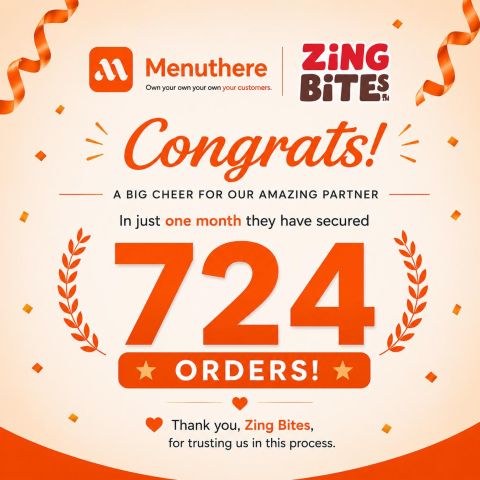
Same channel. Opposite results. Zing Bytes, a restaurant in Kozhikode next to the medical college, hit 10-14 orders a day on WhatsApp ordering by day 3. Now they do 20-30 a day. WhatsApp only. No app. No aggregator.
Meanwhile, Nila Restaurant: a 37-year-old brand with established customers tried WhatsApp ordering and it completely failed. Their customers rejected it and went back to the app.
This looks like a WhatsApp ordering success story for Zing Bytes and a failure for Nila. But that's the wrong conclusion.
The real lesson is about channel fit. Not which channel is winning. Which channel is better for what your customers can actually do when they want to order.
Why Nila's WhatsApp Failed
Nila Restaurants built their customer base over 37 years on a simple pattern: call the restaurant, someone picks up, they know your order.
It's a ritual. It's personal. The cashier recognizes your voice. Your order is ready by the time you arrive.
Then Nila introduced WhatsApp ordering. Type your order into a chat instead of calling.
The math on the surface looks good: one more channel, reach customers who prefer messaging.
But Nila's customers didn't need a new channel. They had a working channel. And the new channel wasn't better, it was worse. Typing is slower than calling. There's no human connection. You can't ask questions mid-order and get immediate clarification.
WhatsApp wasn't solving a problem for Nila's customers. It was replacing something that worked with something that didn't.
So they stopped using it. They went back to calling or moved to the app.
The channel failed not because WhatsApp is bad. But because WhatsApp wasn't better than what Nila's customers were already doing.
Why Zing Bytes' WhatsApp Works
Zing Bytes sits next to Kozhikode Medical College. Their primary customers are doctors on shift and students in lectures.
Here's the critical difference: a doctor on shift cannot make a phone call. A student in a lecture cannot make a phone call.
But they can fire off a message with one hand, in a corridor, in 30 seconds.
For this customer segment, the channel choice isn't between calling and WhatsApp. Calling was never an option.
WhatsApp isn't an alternative. It's the only realistic ordering method that fits their actual behavior.
Day 3: 10-14 orders. By day 30: 20-30 orders a day. All WhatsApp. All from customers whose lifestyle makes calling impossible.
The channel works because it's fundamentally better than the alternative for that customer. Not hypothetically better. Actually better given what they can physically do.
The Framework: Channel Fit Over Channel Trend
This reveals the actual decision framework for ordering channels:
Not: "Which channel is winning in the market?"
But: "Which channel is actually better than what our customers do today?"
For Nila Restaurants: calling works. WhatsApp is a downgrade. Customers choose calling.
For Zing Bytes: calling doesn't work. WhatsApp is the only option. Customers choose WhatsApp by necessity.
The difference isn't technology. It's customer context.
Other examples of this pattern:
QR code ordering works brilliantly for high-volume QSR where customers order at the counter. But it's friction for fine dining where a server takes the order. Different customer context. Different outcome.
Phone ordering works great for customers who drive. It doesn't work for customers mid-shift with both hands occupied.
App ordering works when customers are already app-native. It doesn't work in markets where smartphone adoption is low or customers distrust app installations.
Online ordering via your website works when you have an established web presence and organic traffic. It doesn't work when you're competing against established aggregators customers already have installed.
The pattern is consistent: the best channel isn't the newest or the trendiest. It's the one that's actually better than what your customer can physically do right now.
Measuring Channel Fit
Here's how to test whether a channel is actually better for your customer:
Step 1: Understand the current behavior. How do your customers order today? Call? App? In-person? What does that experience actually look like?
Step 2: Map the new channel against that behavior. Is the new channel faster? More convenient? More aligned with their constraints? Or is it a lateral move that requires them to change their routine?
Step 3: Test with a real segment. Don't roll out across all customers. Identify the segment where the new channel might actually be better (like Zing Bytes identified their medical college segment). Test there first.
Step 4: Measure adoption. If adoption is low, it's probably because the channel isn't actually better for that customer. If adoption is high, you've found channel-customer fit.
The Zing Bytes Pattern
What makes Zing Bytes' WhatsApp success replicable:
Identified a customer segment with a specific constraint (medical professionals and students can't make phone calls during work).
Matched the channel to the constraint. WhatsApp messaging is actually better than calling for that segment. It's asynchronous. One-handed. Doesn't require availability.
Optimized for the channel. Menuthere's WhatsApp ordering integration means Zing Bytes can take orders, process payments, and confirm delivery all within WhatsApp. No switching between tools.
Measured expansion. Started at 10-14/day by day 3. Now at 20-30/day. Clear growth from channel fit, not channel novelty.
Nila Restaurants could have done a similar analysis: "Our customers have called for 37 years and like it. WhatsApp is not better for them. Don't implement it across the board. Test it only with segments where it might actually be better."
That test might have identified a small segment where WhatsApp worked. Or it might have saved them the wasted effort of implementing a channel that didn't fit.
The Broader Lesson
Every restaurant operator faces channel decisions:
Should we add WhatsApp ordering?
Should we build an app?
Should we lean into QR codes?
Should we stay on aggregators?
The answer to all of these is: only if it's actually better for your customer than what they do today.
Not trendy. Not new. Better.
Zing Bytes tested this hypothesis with their customer segment. WhatsApp was actually better. Adoption followed.
Nila Restaurants tested this implicitly. Calling was actually better for their established customer base. They kept calling.
Both outcomes are correct when you're optimizing for channel fit, not channel count.
The real question for your restaurant: What channel is actually better than what your customers do today? Not what channel is winning in the market. What's better for your customer, given what they can physically do when they want to order?
Answer that question honestly. The channel strategy follows.