
Domino's Just Told Its Investors Pizza Hut and Papa Johns Will Keep Closing Stores. The Reason Is Not Pizza.
Domino's CEO predicts more competitor closures as Pizza Hut and Papa Johns chase discounts they cannot afford. The eleven year track record behind that confidence is a lesson for every restaurant operator.
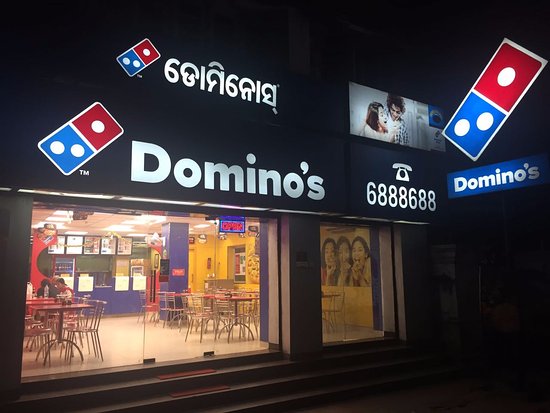
On April 28, 2026, Domino's CEO Russell Weiner used the company's Q1 earnings call to make a pointed prediction. Pizza Hut and Papa Johns will close more stores this year, and Domino's will absorb the share they leave behind.
The numbers behind the call are public and worth sitting with.
Yum Brands, which owns Pizza Hut, has said it will close roughly 250 underperforming Pizza Hut restaurants in the first half of 2026 as part of a strategic review that has also included considering a sale of the brand. Papa Johns plans to close 300 locations by the end of 2027, with about 200 of those slated for this year.
Domino's, meanwhile, posted same store sales growth of 0.9 percent in Q1, slightly below expectations, but is doubling down on its long term position. Per Restaurant Dive's reporting, Domino's franchisees averaged $26,247 in weekly sales in 2024, which adds up to over $1.3 million in average unit volume per store. Pizza Hut's mature franchised stores ran an AUV of just under $1 million in 2025. Papa Johns' standard US stores ran roughly $1.1 million. The stores Pizza Hut and Papa Johns are closing average around $500,000 in annual sales.
That is not a small gap. That is a different business.
What Domino's actually said
Two quotes from the earnings call are worth pulling out cleanly.
CEO Russell Weiner: "What you're starting to see this year is competition, pizza and non pizza, realizing they need to do the same thing. At the end of the day, what that allows us to do is not only to continue to put pressure on our competition and to continue to grow share, but also, this value environment is not going to change for the rest of this year."
CFO Sandeep Reddy: "Our playbook has been to continue to squeeze their profits. They close doors. We take sales. We take share. What is happening in '26 is no different."
That is one of the most candid earnings call quotes you will read this year. Domino's is publicly stating that its value strategy is designed to make competitor unit economics fail. The competitors are now responding with steeper discounts, which Domino's predicts will accelerate closures rather than slow them.
This is a real and verifiable claim. Per Domino's own statements, its competitors closed roughly the same number of stores in 2025 as they are projected to close in 2026. The pattern is not new. It is the continuation of an eleven year run.
The eleven year track record
Weiner laid out the longer arc on the call. Over the past eleven years, Domino's gained 11 points of QSR pizza market share. During that time, Domino's opened roughly 2,000 net new stores while some competitors closed stores. Average annual sales growth across the chain ran over 5 percent. Average franchisee profit per store increased by nearly $80,000. The combined effect across the franchisee base translated to roughly $740 million in additional annual profit compared to where franchisees were a decade ago.
That is what compound advantage looks like in a mature category. More sales fund more stores. More stores create more scale. More scale drives more profit per sale. More profit per sale funds the value strategy that pressures competitor margins. The flywheel turned for eleven years and is still turning.
The question worth asking is what actually drove it.
What Domino's is really doing
The easy answer is "pizza." The honest answer is that Domino's has run the most digitally mature ordering, menu, and promotion infrastructure in QSR pizza for over a decade. Mobile app ordering. Real time promotion engineering. Location specific pricing levers. Personalization through the loyalty program. Integrated delivery economics that protect margin even as discounts flow through the menu.
The "Best Deal Ever" Weiner mentioned on the call is not a creative pricing idea. It is a software product. The same chain can run that promotion in 6,000 stores, watch the data come back the same week, adjust the surrounding menu mix to protect margin, and roll forward. Pizza Hut and Papa Johns are running similar discount strategies from weaker digital foundations and weaker franchisee economics, which is exactly why Weiner can predict on a public earnings call that competitor closures will continue.
The competitors are not losing because their pizza is worse. They are losing because their menu and promotion infrastructure cannot make their value strategy profitable.
This is the part of the story that matters for every restaurant operator who is not Domino's, Pizza Hut, or Papa Johns.
What this means for everyone else
The pizza category is the cleanest public example of a dynamic now playing out across every other restaurant segment.
Operators with digitally mature menu and promotion infrastructure can run aggressive value plays without bleeding margin. They can re merchandise the menu around a promotion. They can adjust pricing in real time based on what is selling. They can launch and retire LTOs in days, not quarters. They can read the data their menu generates and act on it weekly.
Operators without that infrastructure cannot. They run the same value plays anyway because the market forces them to, and they bleed margin doing it. The promotional environment that funds Domino's growth is the same promotional environment that closes a Pizza Hut at $500K AUV. Same playbook, different operating models, opposite outcomes.
This dynamic is not unique to QSR pizza. The same pattern is visible in coffee (Luckin's 31,000 store app only model versus traditional café operators), in casual dining (the chains that survived 2025 versus the ones that did not), and in fast casual (the brands that have rebuilt their menu surface around delivery versus the ones that have not).
The lesson for mid market operators is not that they should try to be Domino's. They cannot, and Domino's eleven year head start is uncatchable. The lesson is that menu and promotion infrastructure compounds. Every week an operator runs on a printed menu while a competitor runs on a digital menu is a week the competitor can A/B test pricing, surface a higher margin add on, retire a slow mover, and read the data. Eleven years of those weeks is the difference between a $1.3 million AUV store and a $500,000 closing store.
The mid market operator's version of this is not a $740 million franchisee profit increase. It is a 5 to 15 percent margin lift, location by location, that compounds into the difference between staying open in 2030 and not.
The Menuthere takeaway
Most independent and mid market restaurants will never have Domino's R&D budget, Domino's engineering team, or Domino's eleven year head start on digital infrastructure. That is fine. They do not need to.
What they need is the underlying advantage Domino's has been quietly compounding for over a decade: a menu that lives as data, a promotion layer that updates instantly, a pricing structure that flexes by daypart and channel, and an operations model that reads the data the menu generates and acts on it weekly.
That advantage used to require building software in house. It does not anymore. Menuthere is what gives mid market operators the same menu agility Domino's spent eleven years building, without the eleven year build cycle.
When Russell Weiner says on a public earnings call that the value environment is not going to change for the rest of the year, he is telling every restaurant operator in any category exactly where the next decade of competitive pressure is coming from. The chains that can flex their menu around it will keep growing share. The chains that cannot will keep closing $500,000 stores.
The window to choose which side of that line a restaurant ends up on is open right now.
Sources: Restaurant Dive coverage of Domino's Q1 2026 earnings call (April 28, 2026), featuring quotes from CEO Russell Weiner and CFO Sandeep Reddy. Domino's 2026 franchise disclosure document. Yum Brands and Papa Johns public store closure announcements (early 2026).