
Nestlé Sells Blue Bottle to Luckin's Owner: What This Deal Actually Tells Café Operators
Nestlé just sold Blue Bottle Coffee to Centurium Capital, the Chinese investor behind Luckin. Here is what happened, why it matters, and what it signals for every café operator watching.
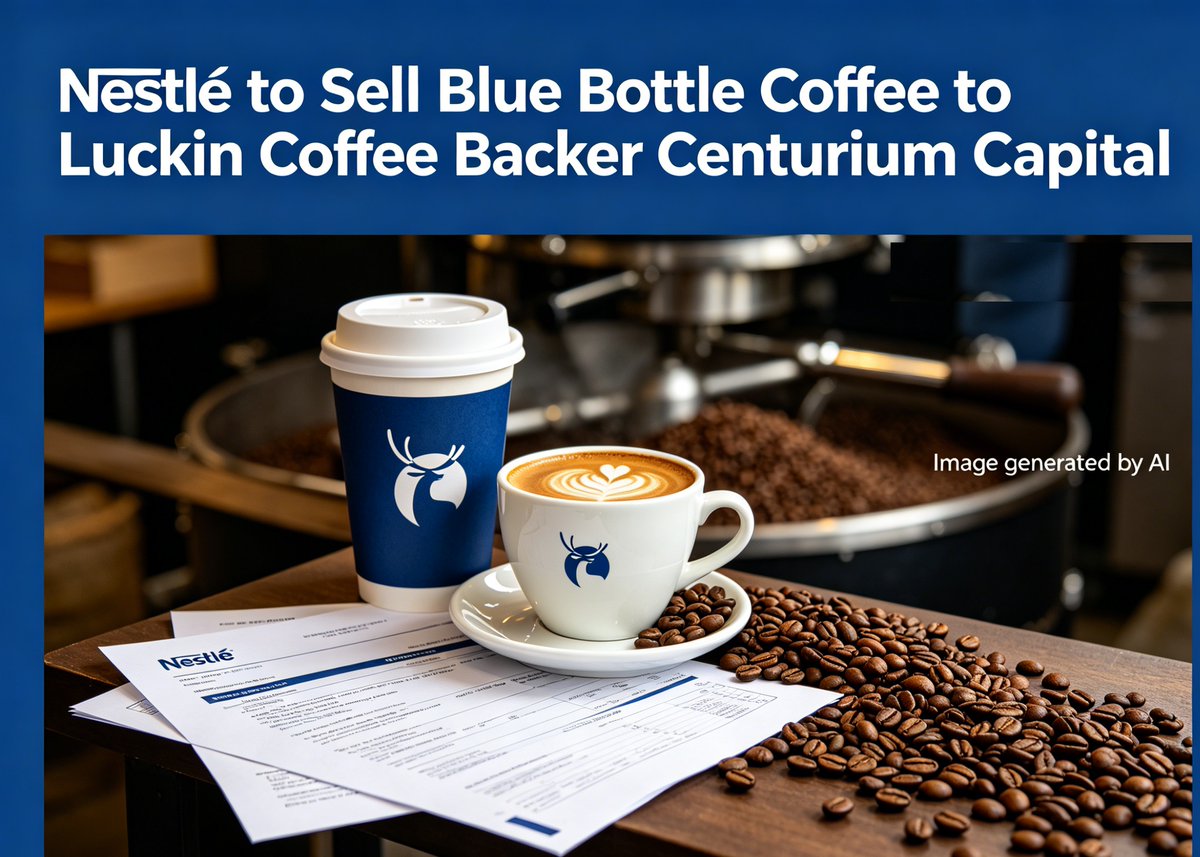
On April 23, 2026, Nestlé confirmed it is selling Blue Bottle Coffee to Centurium Capital, the Beijing based private equity firm that controls Luckin Coffee, China's largest coffee chain. The deal includes Blue Bottle's roughly 100 to 140 cafés worldwide and the majority of its CPG business. Nestlé will retain the rights to Blue Bottle Nespresso pods.
Financial terms were not disclosed by Nestlé, but multiple reports including Bloomberg, BevNET, and CoffeeTalk peg the sale at under $400 million. That is a notable markdown from the $700 million valuation when Nestlé acquired a 68 percent stake in Blue Bottle in 2017, and below the roughly $425 million Nestlé reportedly paid for that controlling position. The deal is expected to close in the first half of 2026.
What Nestlé is doing
Under new CEO Philipp Navratil, Nestlé is in the middle of a sharp portfolio prune. The Blue Bottle sale comes on the same day Nestlé reported first quarter 2026 sales of 21.32 billion Swiss francs, a 5.7 percent drop year over year. Real internal growth (volume, excluding pricing and acquisitions) was up 1.2 percent.
In parallel, Nestlé has announced it is exploring partners for its premium waters business including Sanpellegrino, and looking to sell its mainstream vitamins, minerals, and supplements unit. The strategy is consistent: shed slow growing or capital intensive non core brands, double down on what scales.
For Nestlé, Blue Bottle's café footprint was always the awkward part of the business. Running 100+ premium specialty cafés across the US and Asia is operationally heavy and capital intensive in a way that Nespresso pods, which leverage the existing CPG distribution machine, simply are not. The retained pod rights make that split explicit.
What Centurium is buying
This is the more interesting half of the story.
Centurium became the controlling shareholder of Luckin in January 2022, after Luckin's accounting scandal and US delisting. Their restructuring playbook was specific and aggressive: close underperforming stores, raise prices roughly 60 percent, push everything through an in app purchase system, and expand through franchisees.
It worked. Luckin emerged from bankruptcy in March 2022. By December 2025, the chain had 31,048 stores split between 20,234 self operated and 10,814 partnership locations, with 98.4 million average monthly transacting customers and full year 2025 net revenues of 49.3 billion RMB. Luckin's store count surpassed Starbucks in China years ago and has continued to widen the gap. In July 2025, Luckin opened its first two US stores in New York City, both pickup only.
The Luckin model is worth understanding because it is the operating philosophy now sitting behind Blue Bottle. Luckin orders cannot be placed at a counter. They can only be placed through the app. The store is essentially a fulfillment node for digital orders. Compact footprint, tight throughput, app driven personalization, dynamic pricing by city and daypart, coupon distribution as a real time merchandising tool. The menu is the app, and the app is the menu.
Reports indicate Centurium plans to operate Blue Bottle as a standalone brand, preserving its third wave specialty identity rather than folding it into Luckin's value tier. Yahoo Finance and CoffeeTalk both flag the more interesting question: whether Centurium uses its ownership links to share digital know how, sourcing efficiency, and store rollout discipline across the two businesses, even if the brands stay separate.
The signal underneath the deal
Strip away the M&A details and one signal is hard to miss.
Two of the most operationally distinctive coffee businesses in the world, a 31,000 store Chinese app first chain and a 100 store American third wave premium brand, are now under one capital owner. The first scaled by treating the menu as software. The second scaled by treating coffee as craft. The interesting question is which philosophy ends up shaping the other.
The early indicators point one direction. Luckin's app first model is what made the chain financially viable after a near death corporate event. Centurium's restructuring strategy explicitly used "in app purchase to reduce property and staffing costs." That logic does not stay in Shanghai. It will inform every café Centurium touches from this point forward, including Blue Bottle's premium US stores.
This is consistent with a broader pattern across the coffee category. Starbucks launched its ChatGPT ordering beta on April 15, 2026. Luckin runs 31,000 stores on app only ordering. The premium and the value end of the global coffee market are converging on the same conclusion: the menu has to live in software, not on a printed board behind the counter.
What this means for café and restaurant operators
The Blue Bottle deal is a corporate finance story on the surface. Underneath it, it is a category positioning story that every café and restaurant operator should pay attention to.
Three takeaways are worth holding on to:
The first is that premium and convenience are no longer mutually exclusive. Blue Bottle built its brand on slow, careful, hand crafted service. Luckin built its brand on speed, app, and pickup. Centurium is now betting that the second model can carry the first without diluting it. If they are right, the operational gap between specialty and QSR coffee is about to compress.
The second is that the menu surface is becoming the competitive moat. Luckin does not compete on bean quality. It competes on the ordering experience, the personalization, and the speed. Blue Bottle has historically competed the opposite way. Going forward, both will need both. The cafés that win will be the ones whose digital menu can do real work: filter by milk preference, surface high margin add ons, push the right LTO at the right daypart, and remember the regular without making them tap through five screens.
The third is that the gap between what the giants can build and what mid market operators have access to is closing fast. Luckin and Starbucks have the budgets to build their own ordering software. The other 99 percent of café and restaurant operators do not. They need a digital menu that delivers the same agility (attribute tagging, dietary filters, daypart variants, fast re merchandising, real photos, real data) without a Luckin sized engineering team.
That is the gap Menuthere was built to close. Not by trying to replicate a Luckin app, but by giving operators the same underlying advantage: a menu that lives as data, flexes in real time, and does the merchandising work the printed menu and the PDF QR code simply cannot.
Centurium and Nestlé just made it harder to ignore which direction the category is moving. The window to respond is open now.
Sources: Food Dive (April 23, 2026), BevNET, CoffeeTalk, Yahoo Finance, TechNode, StockCounterparts (Luckin Q4 2025 financials), Wikipedia (Centurium Capital, Luckin Coffee).