
McDonald's Just Redefined Restaurant AI as a Hospitality Tool, Not a Labor Cut. Here's What Operators Should Take From It
McDonald's new AI drive-thru test reframes automation as a way to protect hospitality, not replace staff. What independent restaurant operators should learn from it.
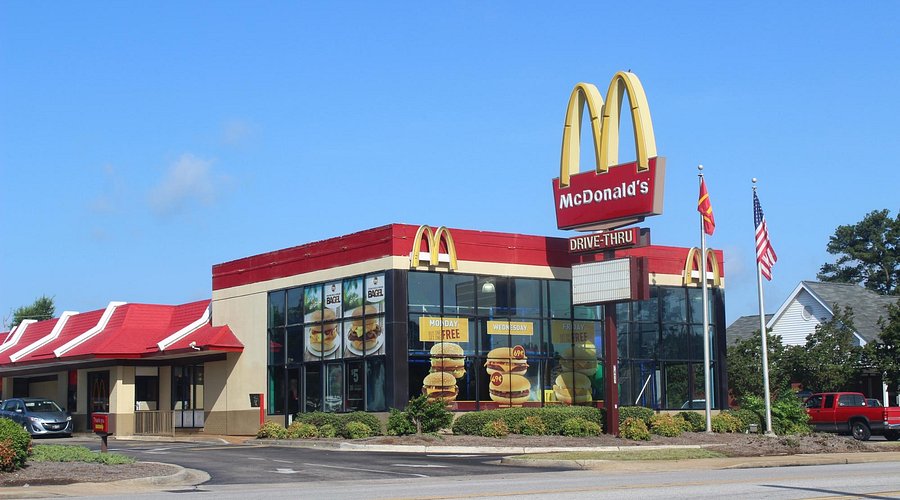
McDonald's is testing voice AI in exactly five drive-thrus. Not five hundred. Five. The system, nicknamed Archy and built with Google, runs at roughly 90 percent order accuracy, and the company has not said what number it needs to hit before going wider. For the largest restaurant brand on earth, that is a strikingly small, strikingly cautious bet.
The number that matters more than five is the one McDonald's chose to lead with. At its convention in Las Vegas, CEO Chris Kempczinski did not frame AI as a way to cut crew. He framed it as a way to free crew up. "We can't ask our customers to choose," he told the system. "Hospitality or speed." That sentence is the real news, and it is worth more to an independent operator than any spec sheet on voice recognition.
Because the lesson is not "buy drive-thru AI." Almost no independent operator should. The lesson is the reframe underneath it, and that reframe applies to every restaurant regardless of size.
The shift: from AI as a cost cut to AI as a hospitality layer
For three years, most restaurant AI pitches have run on a single promise: do more with fewer people. Labor is the second largest line on the P&L, staffing has been tight since 2021, and "automate the order" became shorthand for "cut a position." That framing sold a lot of software. It also produced a lot of disappointment.
McDonald's lived that arc in public. The company ran an AI drive-thru test with IBM across more than 100 restaurants starting in 2021, and quietly shut it off in 2024 without expanding it. The viral failure videos did not help. So when McDonald's came back to drive-thru AI with Google this year, the interesting move was not the new partner. It was the new story.
Kempczinski's logic is worth reading slowly, because it inverts the standard pitch. "As more of the customer journey becomes automated, there are fewer opportunities for guests to connect with crew," he said. "With fewer interactions, the bar for hospitality that makes people feel seen, welcomed, and valued only goes up."
Read that again. Automation does not lower the hospitality bar. It raises it. Every touchpoint you hand to a machine makes the touchpoints you keep matter more, because there are fewer of them and each one now carries more of the guest's impression of you.
Why this matters more for independents than for McDonald's
McDonald's can afford a five store lab and a Google partnership. You cannot, and you do not need to. But the principle scales down cleanly, and it actually lands harder at your size.
A guest at an independent restaurant has fewer interactions with you than a guest at a chain has with the chain. They are not seeing your brand on a billboard or a Super Bowl ad. Their impression of you is built almost entirely inside the four walls and the few digital surfaces they touch before they arrive. When even one of those surfaces is automated or self serve, the rest have to work twice as hard.
This is the part most operators miss. They think about automation as a back of house efficiency question. It is actually a front of house hospitality question. The moment a guest orders from a QR code instead of a server, scans a menu instead of asking a question, or taps a kiosk instead of talking to a host, you have not removed hospitality from the equation. You have relocated it. It now lives in the quality of what they see and how easy you made it to get what they want.
Where operators go wrong
The common mistake is treating digital ordering and self service as a way to spend less attention on the guest. The operators who win treat it as a way to spend that attention better.
If your QR menu is a flat PDF that has not changed since you printed the laminated version, you have automated the order and degraded the experience at the same time. If your menu still shows the breakfast items at 2 p.m., or lists three things you are out of, the machine just made your hospitality worse, not better. That is the trap McDonald's is trying to avoid by moving slowly. You can avoid it by being deliberate about the surfaces you control.
The hospitality and speed playbook for operators who are not McDonald's
1. Decide which interactions are worth keeping human
You do not automate everything or nothing. Map the guest journey and mark the two or three moments where a human touch changes how the guest feels: the greeting, a recommendation, the goodbye. Protect those. Automate the rote steps around them. The goal is not fewer people. It is people pointed at the moments that matter.
2. Treat order accuracy as the floor, not the finish line
McDonald's is sitting at 90 percent accuracy and still will not roll out wide. The takeaway is not the percentage. It is the discipline. A wrong order is a hospitality failure no matter who or what took it. Before you add any self serve layer, make sure the thing it is ordering from is correct, current, and clear. Accuracy starts with the menu, not the technology reading it.
3. Make your digital menu carry the hospitality you removed
When ordering goes self serve, the menu stops being a list and becomes your host. It is the thing that greets the guest, answers their questions, steers them to the right dish, and tells them what you are proud of. That only works if it is alive: priced correctly, switched by daypart, updated when you 86 an item, and merchandised so the high margin dishes get seen. This is exactly the problem a digital menu platform like Menuthere is built to solve, turning a static list into a surface that does the selling and the welcoming a server used to do. A printed menu cannot do that. A flat PDF cannot either.
4. Use the time you free up, do not just bank it
Automation that frees a staffer and then leaves them idle is just a cost cut wearing a hospitality costume. McDonald's is explicit that the point of freeing crew time is to redeploy it toward making guests feel seen. Decide in advance what your freed up minutes are for: table touches, faster food running, a real conversation at the counter. If you cannot name the use, you are not buying hospitality. You are buying a smaller schedule.
5. Move at the speed of your accuracy, not your ambition
The most counterintuitive thing McDonald's did was go small. Five stores. No rollout date. Match that temperament. Pilot one daypart, one location, one menu change. Measure accuracy and guest reaction before you scale. The operators who get burned by restaurant tech are almost always the ones who deployed faster than they could verify.
The bottom line
McDonald's spent four years learning that the question was never whether AI could take an order. It was whether AI could take an order without making the restaurant feel colder. Their answer is to automate carefully and pour the savings back into the human moments and the surfaces guests actually touch.
For an independent operator, the translation is simple. Every step you make self serve raises the bar on everything that is left. Your menu is the surface that is left in almost every case. If it is static, you have automated the transaction and abandoned the hospitality. If it is alive, current, and built to guide a guest the way a good server would, you get the speed without giving up the welcome.
The chains will spend hundreds of millions learning this. You can learn it from one sentence and one good menu.
See how Menuthere turns your menu into the surface that greets, guides, and sells the way your best server does.
Sources: Restaurant Business Online (McDonald's Next strategy and Kempczinski remarks, June 2026); QSR Magazine (McDonald's > NEXT framework and Archy test, June 2026); Los Angeles Times via Complex (90 percent accuracy figure, June 2026); CNBC and NBC News (IBM partnership wind down, 2024); Deloitte 2025 restaurant executive survey.