The Direct Order Comeback: Why Indian Diners Are Bypassing Zomato and Swiggy in 2026
Indian customers are skipping Zomato and Swiggy, ordering directly from restaurants and using Porter or Rapido for pickup. Here is the operator playbook.
Indian customers are skipping Zomato and Swiggy, ordering directly from restaurants and using Porter or Rapido for pickup. Here is the operator playbook.
Previous article
Zomato and Swiggy commissions have crossed the point where the aggregator-only channel mix kills margin. Indian restaurants are quietly rebuilding the order flow. Here's the playbook.
Next article
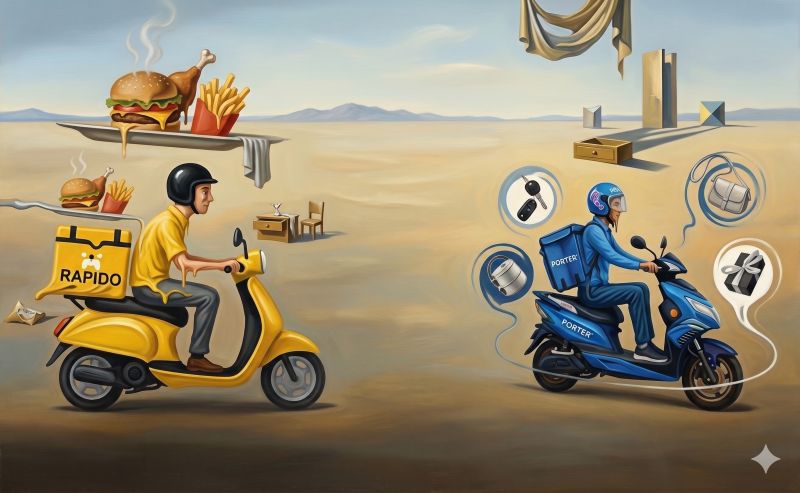
A graduate from Delhi posted a hack on X in September 2025: stop using Zomato and Swiggy, call your regular restaurant, ask them to pack the food, and send a Porter or Rapido to collect it. Even after paying ₹50 to ₹100 for the pickup, she said the bill came out cheaper. The post went viral. Inside the comments, one Mumbai customer pointed out something sharper: their regular restaurant runs two portion sizes, a smaller one for Zomato and Swiggy orders, a larger one for direct orders.
That is not a hack anymore. That is the new economics of food delivery in India.
In March 2026, Zomato raised its platform fee 19% to ₹14.90 per order. Swiggy followed within days, lifting its own fee to ₹17.58. On orders above ₹300, customers are now paying markups of 40 to 50% above what the same meal costs at the restaurant counter. The aggregator promise of cheap convenience has quietly become expensive convenience. And the diners are doing math.
For restaurants, this is the most strategic moment of the post-pandemic era. The customer is leaning in. The third-party logistics layer (Porter, Rapido, Dunzo, WeFast) is mature. The only question is whether the restaurant has a direct ordering surface ready to receive the demand.
Aggregators charge restaurants between 16% and 30% commission depending on city, category, and discount programs. Layer on packaging fees, payment gateway fees, marketing spend to rank inside the apps, and the effective revenue cut routinely crosses 35% for small and mid-size operators, according to NRAI data published over the last two years.
For the customer, the picture is just as steep. A ₹350 order on Zomato or Swiggy in a metro city in 2026 typically arrives with a stacked bill: the food, packaging fee, delivery fee, surge or weather charge, GST on each component, and a platform fee that has nearly tripled since 2023. Customers screenshotting their checkout pages and posting the breakdowns has become a recurring social-media genre.
Meanwhile, Rapido entered the food delivery race in March 2026 with Ownly, a zero-commission alternative that promises restaurants 100% of food revenue and prices that run roughly 15% lower for customers. Ownly is positioning itself in direct partnership with NRAI and arrived with 20,000 restaurant partners on day one. Even if Ownly never replaces the duopoly, its pricing pressure has reset what operators believe is possible.
Add the third leg: pickup logistics services like Porter and Rapido (the bike-taxi business) have become so cheap and so reliable that any restaurant in a tier-1 city can effectively borrow a delivery fleet on demand without paying a platform commission on the food itself.
Three forces converged.
First, aggregator economics ran out of room on the supply side. Both Zomato and Swiggy are publicly listed companies under intense profitability pressure. Platform fees are the cleanest revenue lever they have, because every rupee added flows almost entirely to gross profit. The result has been steady, repeated increases that customers cannot avoid by switching apps because both platforms move in lockstep.
Second, customers crossed a price-sensitivity threshold. Through 2023 and 2024, Indians tolerated rising aggregator costs because the convenience was unmatched. The September 2025 viral hack moment was not an isolated event. It signaled that enough customers had done the math and concluded that the convenience premium was no longer worth it for repeat orders from familiar restaurants.
Third, the alternative infrastructure quietly matured. Porter, Rapido, Uber package delivery, Dunzo, WeFast: all offer point-to-point pickup in metros at predictable rates. A restaurant does not need its own delivery fleet to operate a direct ordering channel anymore. It only needs an ordering surface, a phone number, and a relationship with the customer.
The restaurants that should benefit most from the direct order shift are the ones least prepared for it. The common failure pattern looks like this:
The restaurant has a presence on Zomato and Swiggy, a Google Maps listing, and an Instagram account that gets updated when there is time. There is no website, or there is a website that has not been updated since 2022 and shows a PDF menu from a previous season. There is no easy way for a returning customer to place an order without opening Zomato or Swiggy. The restaurant does not have phone numbers or email addresses for its loyal customers, because the aggregator has always sat in between.
When a customer like Krisha decides to order direct, she has to call, describe what she wants, hope the staff understands, send a payment, and coordinate the Porter pickup separately. It works once. It does not scale. Most customers will not put up with that friction repeatedly, and the restaurant loses the moment.
The opportunity is real. The infrastructure is there. The customer is willing. The missing layer is the restaurant's own ordering front door.
Pick a single, memorable URL that is your restaurant's name or close to it. Make it the link in your Instagram bio, on your Google Business Profile, on every printed receipt, on every table tent. The first goal is to give every customer who has ever eaten with you a friction-free way to come back without going through an aggregator.
The menu is not a PDF. It is the page customers spend the most time on, and it is where ordering decisions are made. Items need clear photos, accurate descriptions, modifier groups, dietary tags, and pricing that updates instantly when you raise or lower it. The menu is also the surface where you merchandise your highest-margin items, your daypart specials, and your direct-only deals.
This is where Menuthere fits in. Menuthere is a digital menu platform built so restaurants can run a single menu surface across QR table ordering, takeaway pickup, and direct delivery, with daypart switching, instant updates, and visual merchandising of high-margin items built in. Operators rebuilding their direct order channel use it as the spine that holds the menu together.
Most independent restaurants will lose money trying to run their own delivery operations. Use Porter, Rapido, Dunzo, or whichever pickup service has the best coverage in your area. Build the fulfillment flow into your direct order page so a customer placing an order can either pick up themselves, or trigger a third-party rider to collect.
The Mumbai restaurant with two portion sizes is doing intuitive direct-channel pricing, but most operators do not think about it that strategically. Decide what your direct order proposition is. It can be a slightly larger portion, a complimentary item on every third order, a loyalty stamp, or simply a price that is 10 to 15% lower than the aggregator listing because you are not paying 30% commission. Make the value visible to the customer so they have a reason to switch channels.
The single biggest hidden cost of aggregator dependence is that you do not know your customers. Names, phone numbers, order history, preferences, frequency: all of it sits with the platform. On a direct order, all of it sits with you. Use it to build a rebooking flow, a loyalty program, a WhatsApp or SMS list for new menu launches. Once a customer has ordered direct twice, the lifetime value of keeping them on your channel compounds quickly.
Every Zomato and Swiggy order leaves your kitchen with a packaging surface. Use it. A small printed insert that says "next time, order direct, save the platform fees" with a QR code linking to your direct order page is the single highest-ROI customer acquisition tactic available to a restaurant in 2026. The aggregator paid to acquire the customer the first time. You can convert them to a direct customer for the cost of a printed sticker.
The aggregator era is not ending. Discovery, new-customer acquisition, and the long tail of one-time orders will still flow through Zomato and Swiggy for the foreseeable future. What is changing is the economics of repeat orders from your loyal customers. Those customers are now actively shopping for ways to bypass the aggregator markup, and they have the tools to do it.
The restaurants that come out of 2026 stronger will be the ones that built a direct order channel ready to catch that demand. The ones that wait will keep paying 30% commission on customers who would happily order direct if the option existed.
The infrastructure is no longer the bottleneck. The menu surface is.
Ready to build a direct order channel that actually converts?
Menuthere gives your restaurant one digital menu that works across QR tables, takeaway, and direct delivery, with the daypart switching, instant updates, and visual merchandising you need to convert aggregator customers into direct ones.
Sources: Entrepreneur Loop on Zomato platform fee hike (March 2026), StartupTalky on Swiggy fee increase (March 2026), Free Press Journal on Rapido Ownly launch (March 2026), News9 and Postoast on viral direct ordering hack (September 2025), NRAI publications on aggregator commissions, The Pioneer on restaurant association pushback.
71% of restaurant operators are raising menu prices in 2026. Here is the data-backed playbook to do it without losing your most price-sensitive diners.
Restaurant technology
Dine in has a menu and a server. Delivery has a dashboard and analytics. Takeaway has a person standing at a counter being served by whoever is nearest.
Operations
Owners avoid direct ordering because a failed delivery becomes their fault. The research says customers already blame the restaurant. You carry the blame without the control.