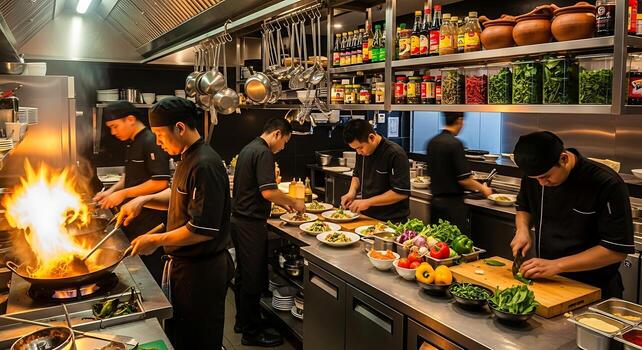
Picture a busy Friday night at your restaurant. An order comes in from your website. Your staff copies it manually into Pet Pooja. Then calls the kitchen. Then messages a driver on WhatsApp. Then the customer calls asking where their food is.
That entire chain just cost you five minutes, two staff members, and one frustrated customer on a single order.
Now multiply that by 40 orders a night.
This is the reality for thousands of Indian restaurants in 2026 running disconnected tech systems. And according to a major industry analysis by QSR Web, it is now the number one operational problem destroying restaurant profitability not food costs, not rent, not even aggregator commissions. Fragmented technology.
The good news: the fix is straightforward. It is called a unified POS system, and the restaurants that have made the switch are seeing the difference immediately.
What "unified POS" actually means
A unified POS is not just a billing machine. It is a single connected system where every part of your restaurant operation flows through one platform online orders, dine-in billing, kitchen tickets, delivery dispatch, inventory, and reporting.
When a customer places an order whether from your website, your app, or a table QR code it lands directly in your POS. The kitchen display updates automatically. A driver gets assigned without anyone picking up a phone. The customer receives a live tracking link. Your end-of-day report captures everything.
No manual re-entry. No WhatsApp coordination. No missed orders during peak hours.
Why disconnected systems are so costly
Most restaurants did not build their tech stack in one go. They added tools one by one, a POS here, an online ordering plugin there, a delivery WhatsApp group somewhere in between.
The result is a system where nothing talks to anything else, and your staff becomes the glue holding it all together.
Here is what that costs in practice:
Order errors happen when staff manually re-enter orders from one system to another. A wrong item or missed modifier on a busy night leads to a remake, a refund, and a bad review.
Slow kitchen response happens when the POS and kitchen display are not connected. Tickets get printed, lost, or delayed and delivery times suffer.
Driver chaos happens when dispatch is done manually over WhatsApp. One driver gets three orders, another gets none. Customers wait. Staff fields phone calls they should not have to take.
Zero visibility happens at the end of the day when your sales data sits in three different places and nobody knows the actual numbers.
Every one of these problems disappears with a unified system.
What Pet Pooja restaurants specifically need
Pet Pooja is used by over 150,000 restaurants across India and is one of the most powerful POS systems in the market. But Pet Pooja alone does not manage your online ordering channel or your delivery drivers.
That is the gap.
What Indian restaurants on Pet Pooja need is a layer that sits on top, connecting your direct online ordering to Pet Pooja, and connecting Pet Pooja to your driver dispatch system. When all three are linked, you have a fully unified operation.
An order placed by a customer on your website or app flows directly into Pet Pooja. The kitchen sees it instantly. The restaurant assigns a driver with one tap. The customer gets a tracking link. You see the full picture on one dashboard.
This is not a feature of the future. Restaurants doing this today are handling more orders with fewer staff and fewer errors.
The competitive advantage is widening
The QSR Web analysis makes one thing very clear: the gap between restaurants with unified tech and those without is growing every month in 2026. Customers now expect real-time tracking, accurate ETAs, and seamless ordering as a baseline, not a bonus.
Restaurants that rely on manual coordination cannot match that experience consistently. And in a market where a one-star drop in ratings can shift hundreds of orders a month to a competitor, consistency is everything.
Unified POS is not a technology upgrade. It is a business decision about whether you want to be operating at the standard the market expects, or falling behind it.
Getting started
If you are on Pet Pooja and running your own delivery drivers, the path to a unified operation is simpler than most restaurant owners expect.
Menuthere integrates directly with Pet Pooja POS and adds the two missing layers: a direct online ordering channel that feeds into Pet Pooja automatically, and a delivery management system that dispatches your drivers without any manual coordination.
The result is a fully connected operation from the moment a customer places an order to the moment it is delivered running through one unified system.
No more WhatsApp dispatch. No more manual re-entry. No more guessing which driver has which order.
If your restaurant is still running on disconnected tools in 2026, the cost is higher than you think. The restaurants pulling ahead right now are the ones who closed that gap first.
Ready to see how it works for your restaurant?
Book a free demo with Menuthere