QR Code Ordering vs Paper Menus: How Restaurants Can Serve Faster With the Same Team
The fastest way to serve faster is not hiring another server. It is removing the wait that happens before the order is even placed.
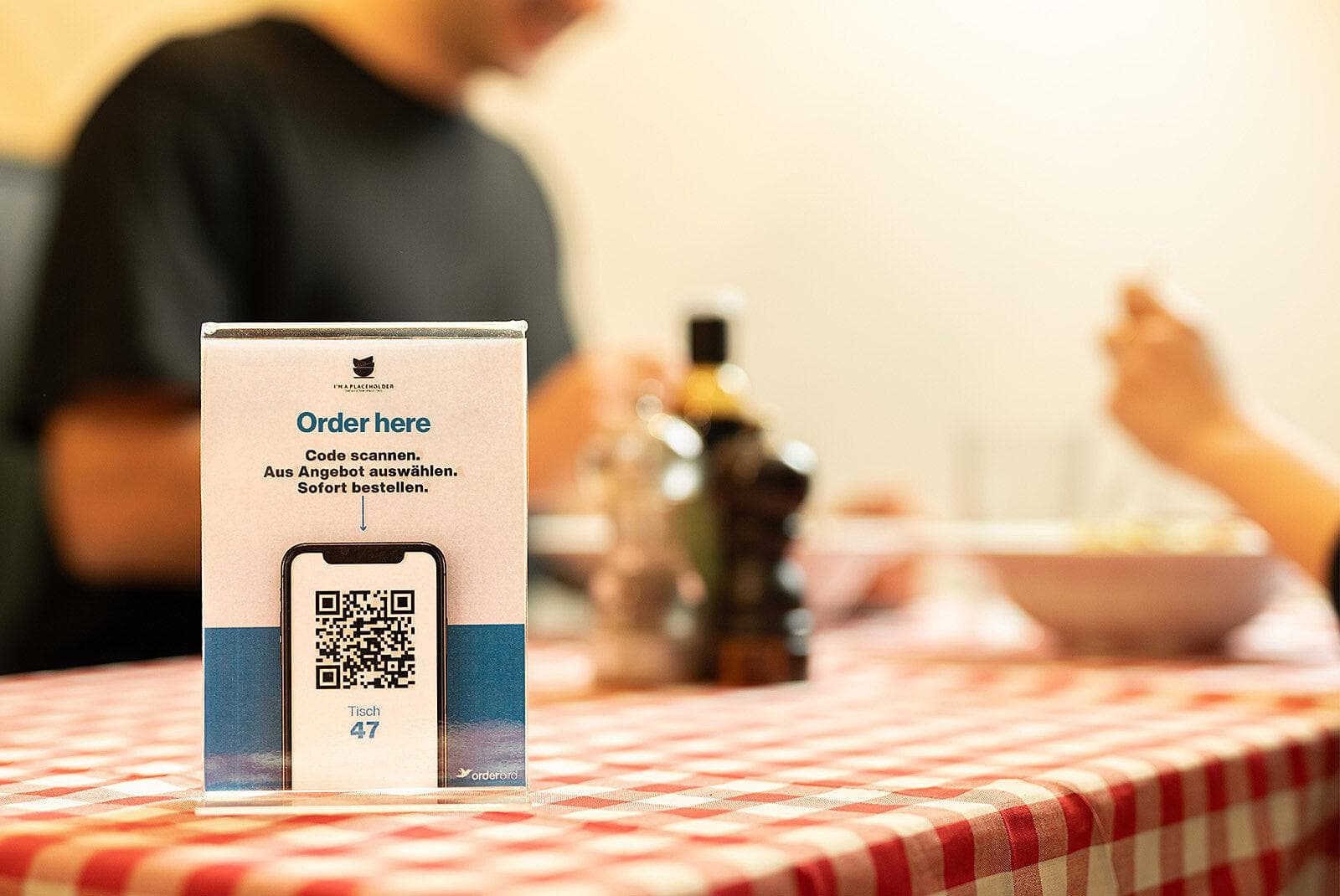
The fastest way to serve faster is not hiring another server. It is removing the wait that happens before the order is even placed.
Consider a typical 20 table restaurant running a dinner service with 2 or 3 servers. That is 7 to 10 tables per server.
With a paper menu, every table depends on a server to hand over the menu and return to take the order. During peak hours, guests often wait 10 minutes or more before the kitchen even receives their order.
Where the ten minutes actually goes
Break the paper flow into its steps and the waiting is easy to see.
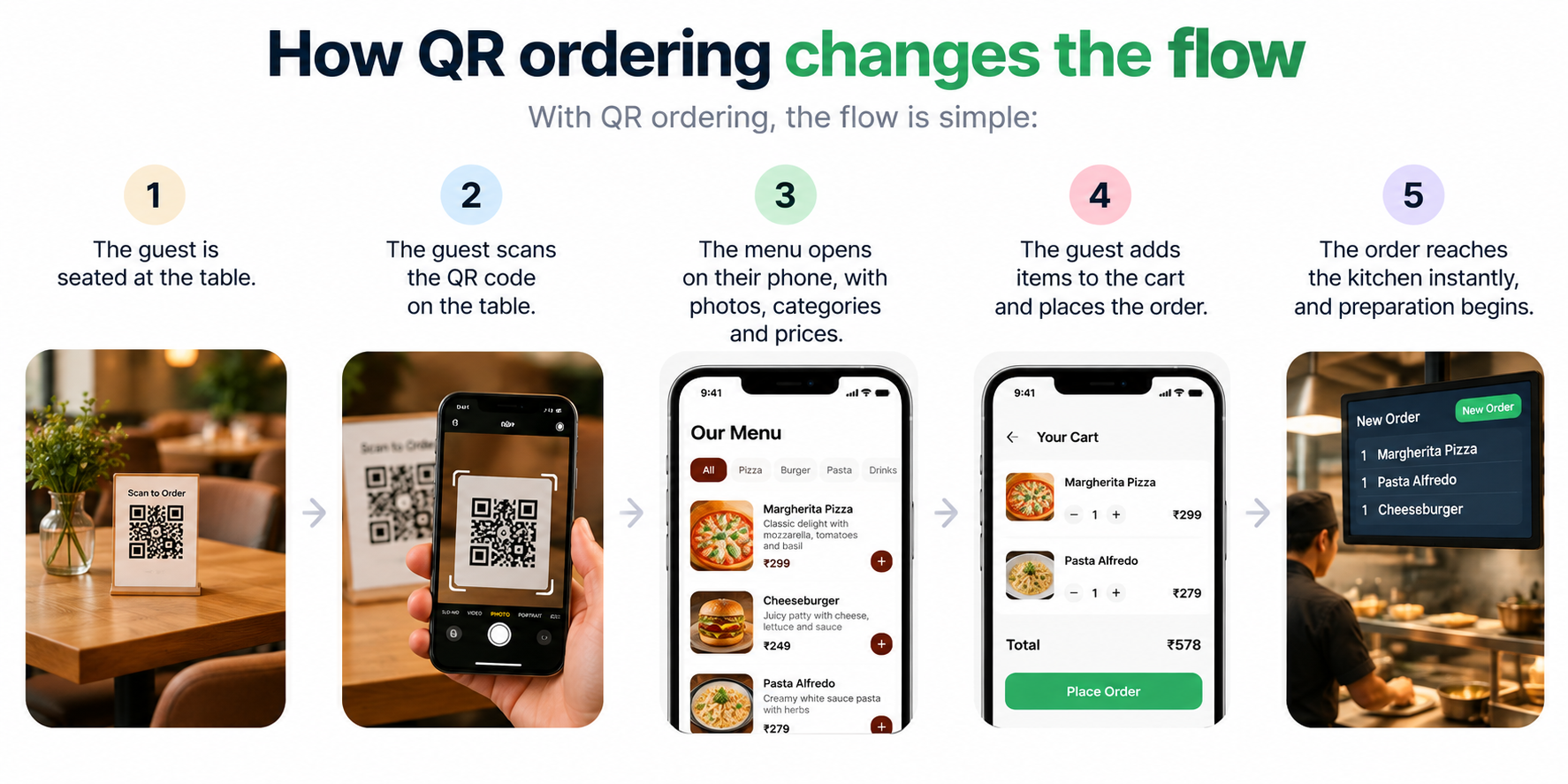
The guest is seated. They wait for a menu. They read it. They wait to be noticed. They order. The server walks to the till and enters it. Only then does the ticket reach the kitchen.
Three of those steps are the guest waiting for a person who is currently at another table, and one more is a server doing data entry instead of hospitality. None of it is a service failure. It is arithmetic. One server cannot be at three tables at once, and during the rush they are usually needed at five.
The usual answer to a slow floor is more people on it, and that answer keeps getting harder to execute. 22% of US operators report not having enough staff to meet demand (National Restaurant Association and Workday, 2025).
So the more useful question is not how many more servers do I need tonight. It is how many of my server's steps are actually service, and how many are order entry that a phone already on the table can absorb. Taking an order is the one part of the job that does not need a person standing there, and it is the part that eats the hour when the room is full. Hospitality is the part that does.
Orders reach the kitchen without delay, so the ticket is in while the guest is still settling in.
Food is served faster, because the clock started earlier rather than because anyone cooked faster.
Add on items such as drinks and desserts are one tap away, at the exact moment the guest is deciding.
Tables turn more efficiently, which at peak hour is the difference between a queue at the door and a seated guest.
The order is typed by the person who wants it, which removes a whole category of mishearings and remakes.
Servers spend their time on hospitality instead of order taking.
Adoption is not uniform, and the operators who get this wrong are usually the ones who treat QR ordering as all or nothing.
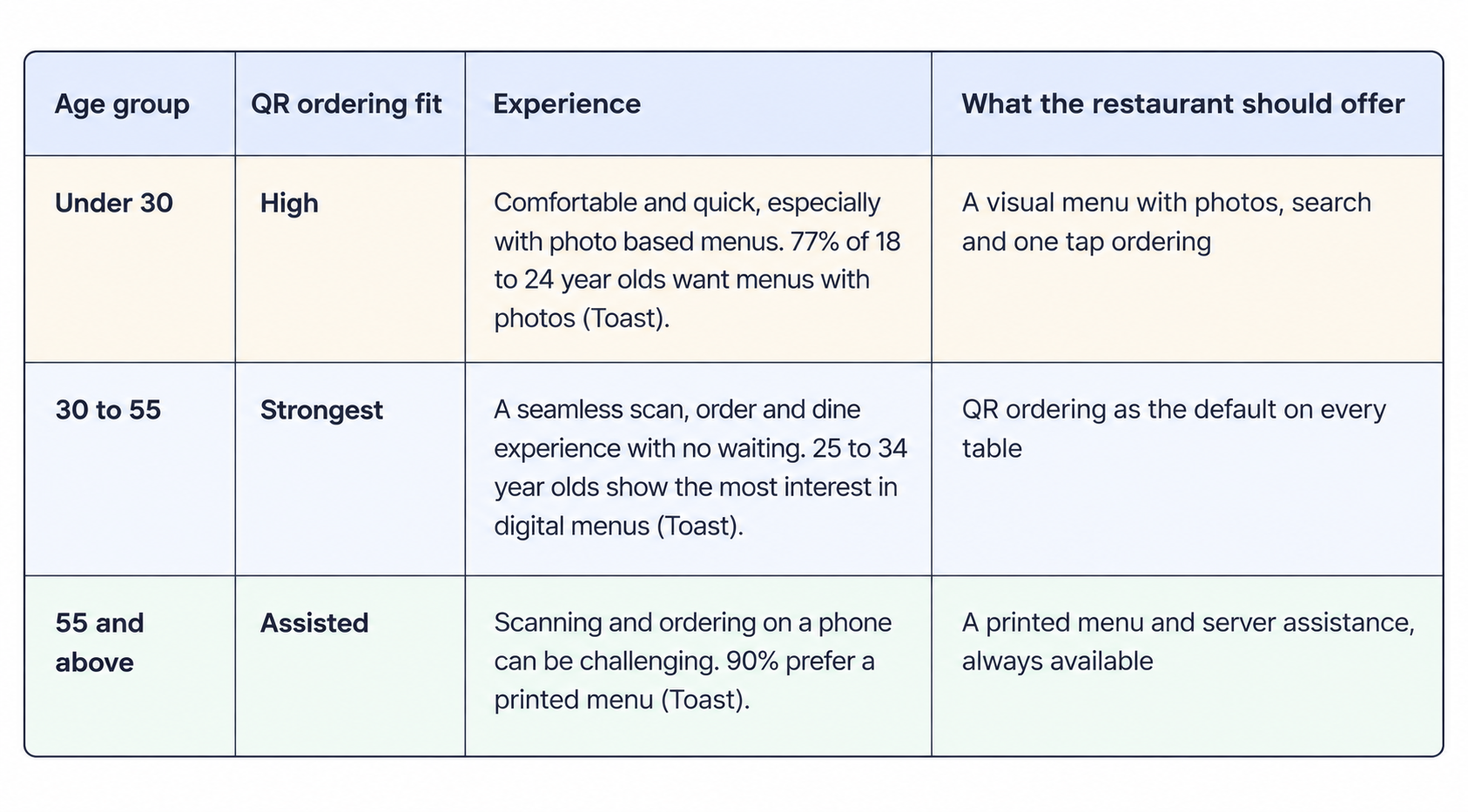
QR ordering does not replace hospitality. It removes the waiting that gets in its way.
This is the approach behind Menuthere, and our free plan makes it accessible to restaurants of every size, in every market.
How are you managing peak hour service with your current team size?
#RestaurantIndustry #QROrdering #DigitalMenu #RestaurantOperations #Hospitality